


The carbon footprint of the Valmorel Ski Area
Do you know the carbon footprint of a ski day?
In 2022, UTOPIES, in partnership with ADEME, measured the carbon footprint of a single ski day. These numbers help us understand the individual impact of every ski stay and develop solutions to reduce it.
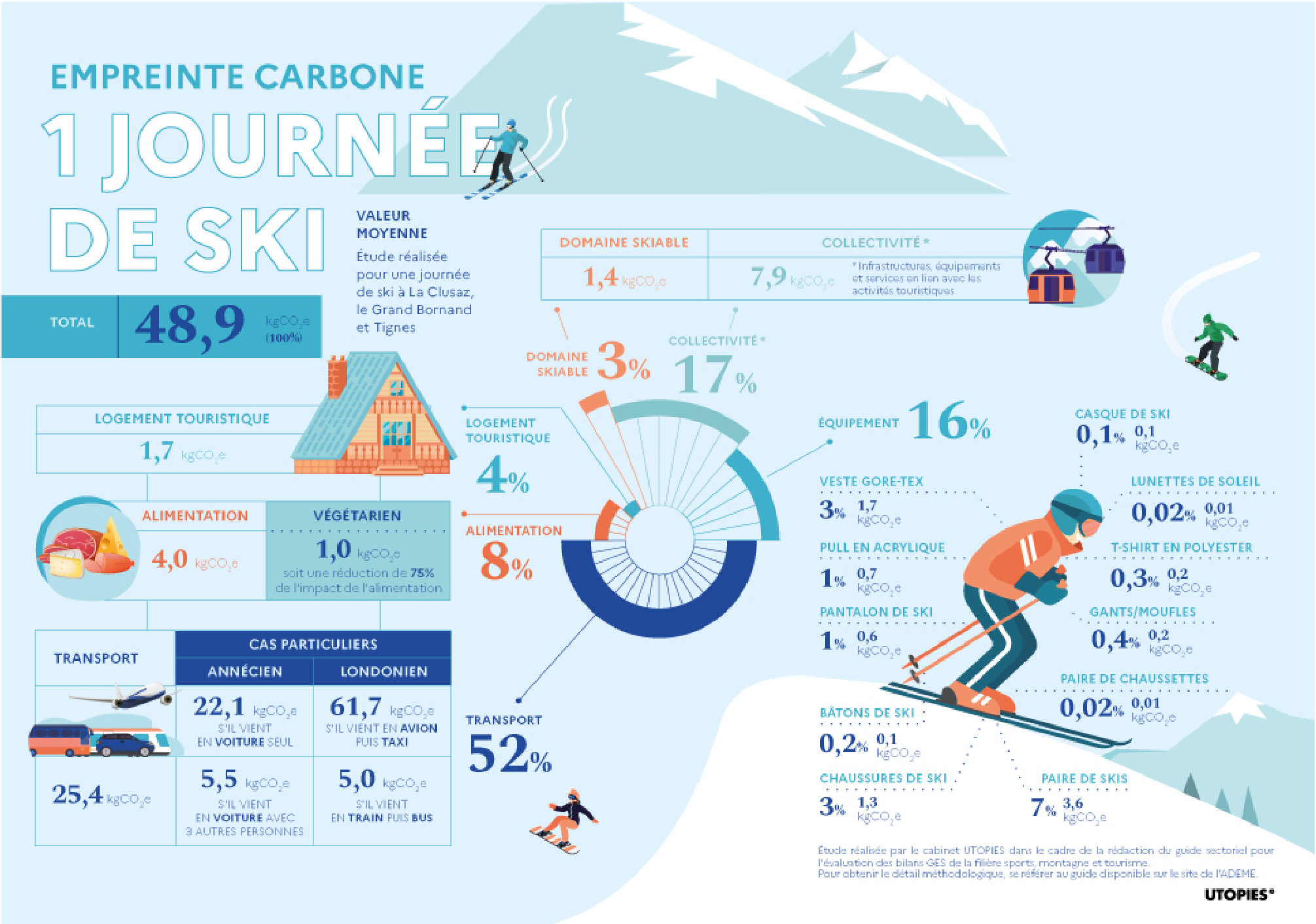
Infographic created by UTOPIES/ADEME using data from La Clusaz, Le Grand Bornand and Tignes (February 2022).
Did you know?
Transport accounts for the vast majority of emissions, overshadowing those linked to facilities and activities on site. This highlights how crucial it is to rethink mobility to ski resorts by promoting public transport and low-emission travel alternatives.
And at Valmorel?
With the research firm DAMOE, we conducted our own carbon assessment — a key tool to track our footprint and implement concrete reduction actions.
To precisely measure the impact of a ski day, GHG emissions are divided into three “scopes”:
- Le Scope 1Direct emissions from our activity, such as groomers, vehicles, and equipment on the slopes.
- Le Scope 2Indirect emissions from electricity consumption (lifts, buildings, ski area installations).
- Le Scope 3Indirect emissions, mainly visitor travel to the resort — often the biggest share.
This global approach helps us focus efforts where they’re most effective on the road to carbon neutrality.
CO₂-eq Emissions at Valmorel
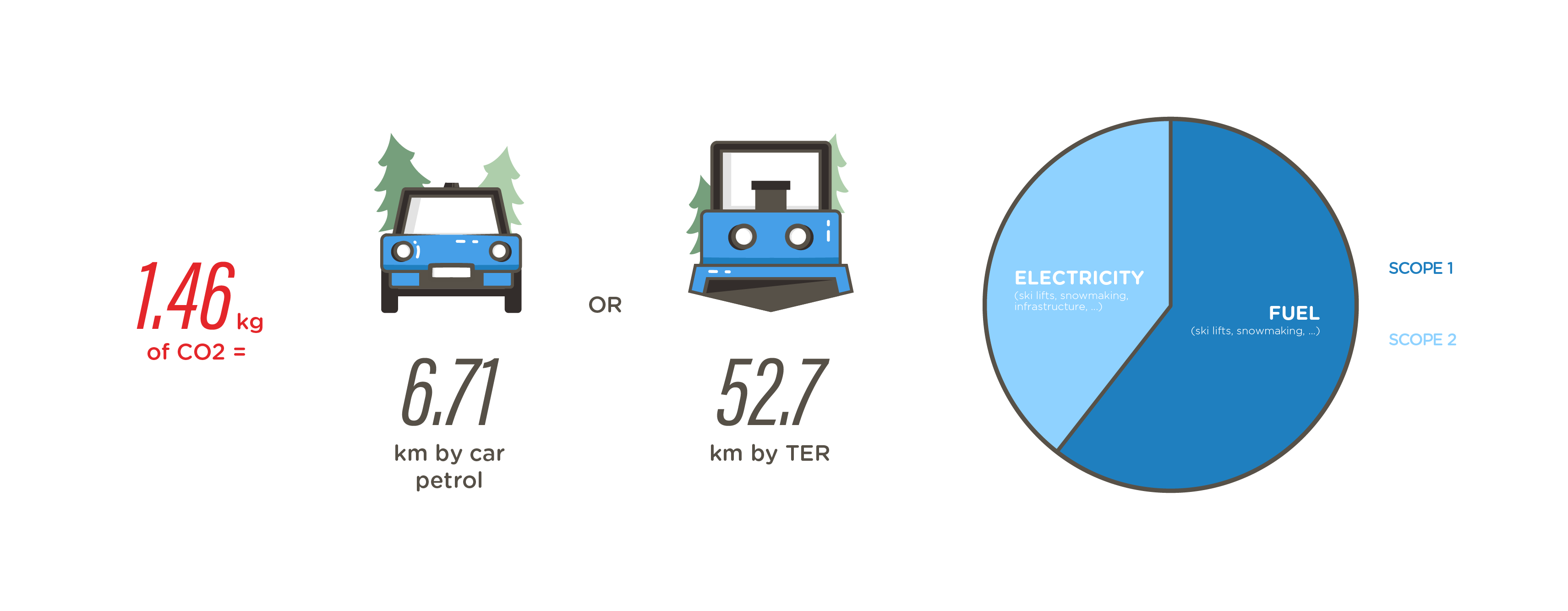
SCOPE 1 + SCOPE 2:
direct emissions & energy consumption
This includes:
- Direct emissions from ski area operations (Scope 1).
- Energy consumption required to operate the resort (Scope 2).
A ski day at Valmorel generates 1.46 kg of CO₂ per skier, equivalent to about 6.7 km by car or 53 km by regional train (TER).
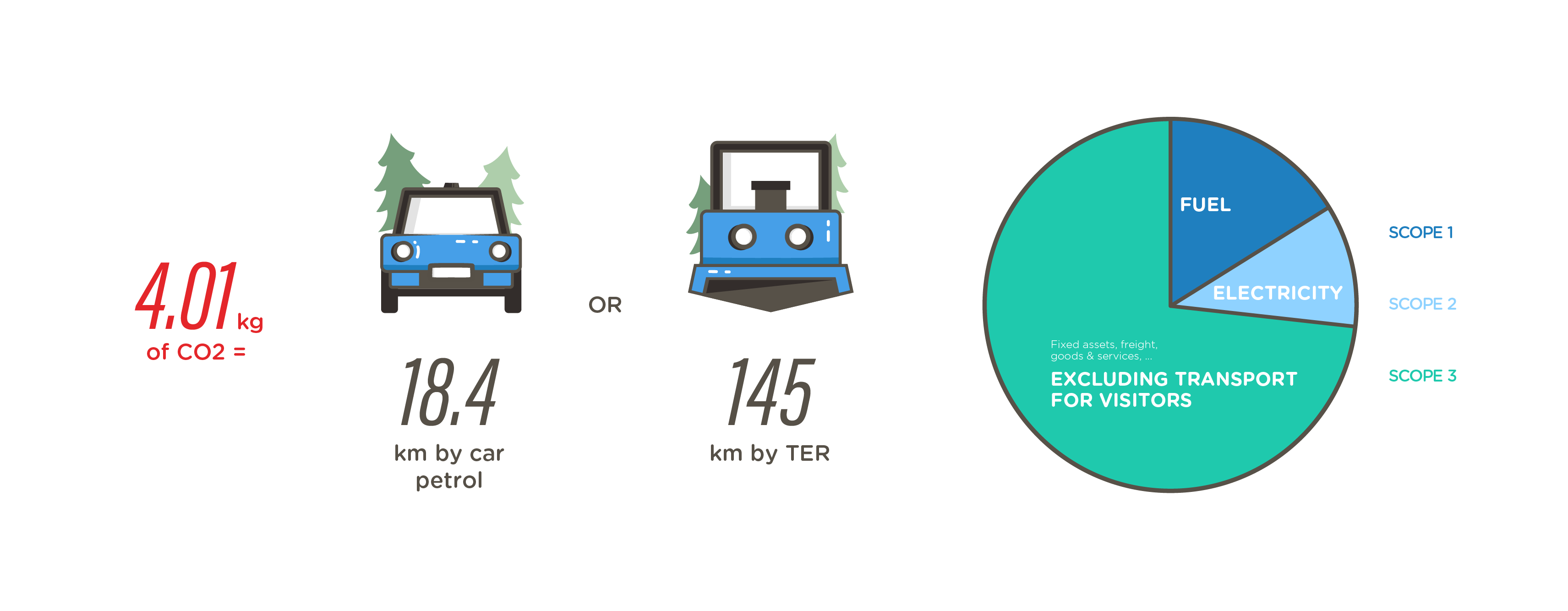
SCOPE 1 + SCOPE 2 + SCOPE 3
(EXCLUDING SKIER TRANSPORT)
Including all emissions across the three scopes except visitor travel:
- Taking into account all GES emissions from the three SCOPES, with the exception of transporting skiers to the resort, the results are as follows.
A ski day generates 4.01 kg of CO₂ per skier, equal to 18.4 km by car or 145 km by TER.
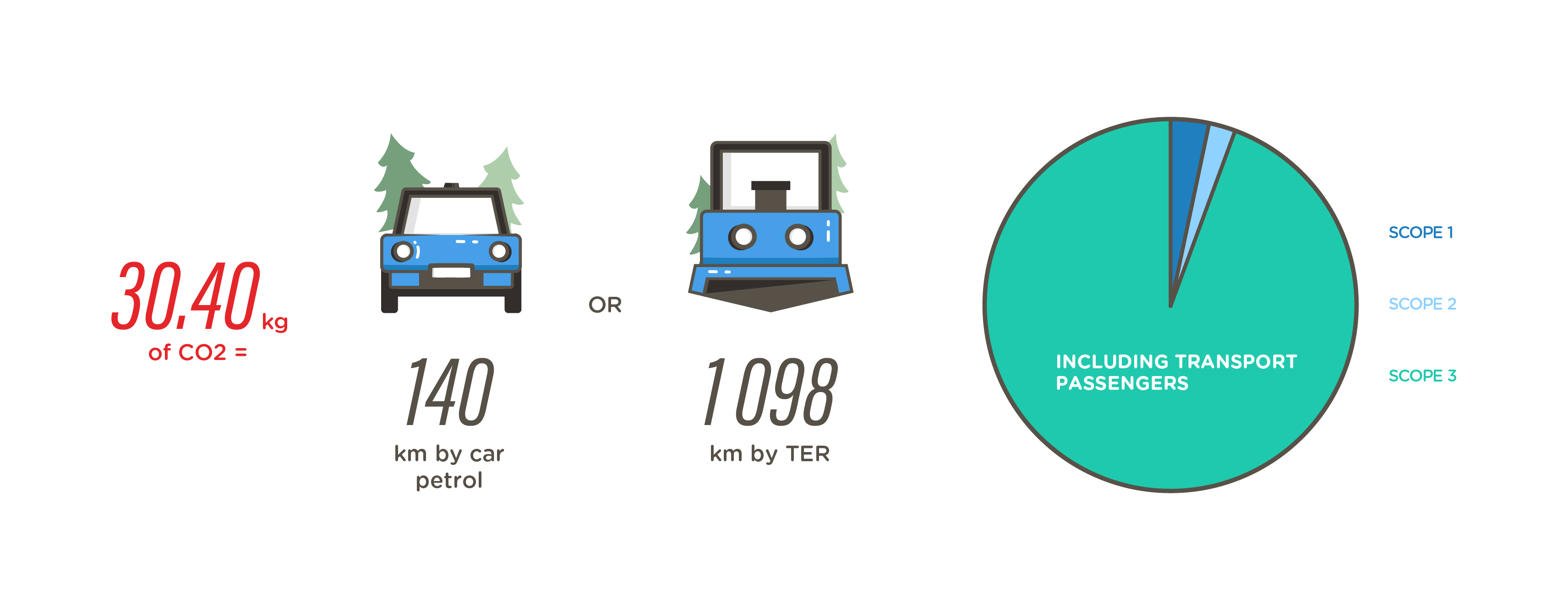
SCOPE 1 + SCOPE 2 + SCOPE 3
(INCLUDING SKIER TRANSPORT)
When adding visitor transport to Valmorel:
A ski day generates 30.40 kg of CO₂ per skier.
These estimates are based on a customer origin survey (EFICEO) conducted by DAMOE (2022–2023), covering 514,389 skier-days.
Why is it still hard to calculate a full footprint?
Some key data remains difficult to obtain: emissions linked to ski equipment manufacturing, lodging, restaurants, and infrastructure construction require more detailed analysis.
In short:
Valmorel’s direct GHG emissions represent only 3% of the total footprint of a mountain destination — but our goal is carbon neutrality by 2037.
To achieve this, we’ve launched several initiatives:
Reducing scopes 1 & 2 emissions
Responsible grooming practices:
- Training our 10 groomer drivers in eco-driving techniques to reduce fuel use.
- “The right machine in the right place”: reorganizing grooming routes and departure points for better efficiency.
- Equipping all 10 groomers with Snowsat* technology to measure snow depth precisely and avoid unnecessary passes.
*Snowsat is software that measures the exact thickness of snow cover using a state-of-the-art GPS system. This revolution in snow grooming allows drivers to know precisely where snow is lacking, thereby optimising machine passes to reduce fuel consumption. Working in collaboration with snowmakers, Snowsat's measurements provide quantitative data for producing snow in areas where it is lacking.
Reducing indirect emissions (Scope 3)
Remember:
Transport represents 52% of a ski day’s emissions — about 25 kg of CO₂ per skier, equivalent to 30 hours of a running dryer.
To help reduce this, we encourage low-carbon travel, especially train journeys, with our “Travel Green” offer:
15% off future ski passes for all visitors arriving by train.
For the 2024–2025 winter launch, 24 requests were submitted to benefit from the offer.
Goal for the second season: 35 requests.
From skiers to take advantage of the ‘Travel Green’ offer, and continue to change travel habits towards a more responsible approach to the mountains.
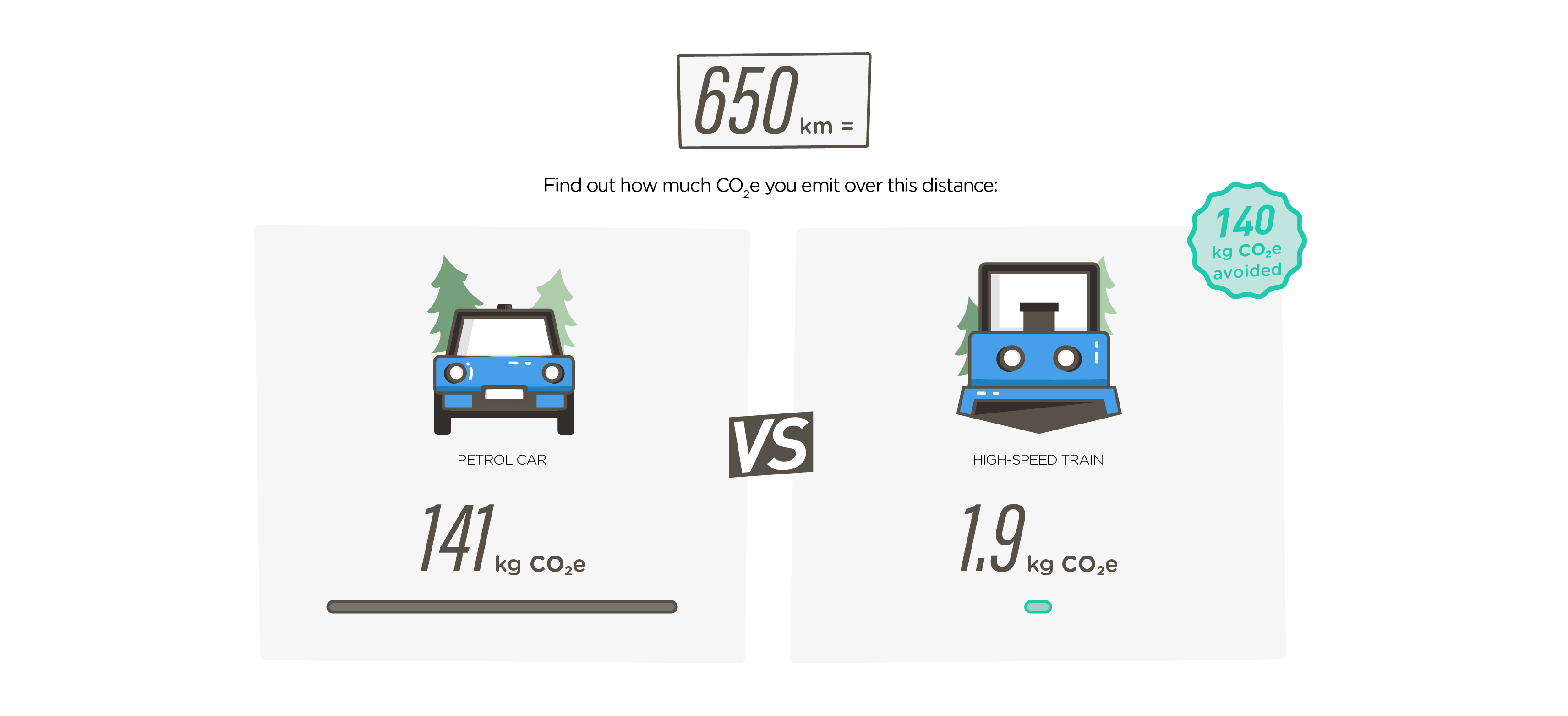 Comparison of CO2 emissions over a distance of 650 km, roughly equivalent to the journey from Paris to Valmorel. Source: ADEME
2037 may seem far away, but every collective effort builds its foundation. Beyond numbers, the goal is clear: reduce transport-related CO₂ emissions.
Official partner of the Valmorel ski area 


